
Is Your Water Undermining Your Results?
Water is one of the most widely used reagents in life science laboratories. From molecular biology and analytical testing to pharmaceutical manufacturing, it plays a fundamental role in preparing solutions, supporting experiments, and maintaining consistent processes.
Yet despite its widespread use, water quality is not always evaluated with the same attention given to other critical laboratory reagents.
The wrong water specification can introduce an overlooked source of variability, potentially affecting experimental reproducibility, analytical accuracy, and process consistency.
Selecting laboratory water based on its intended application—and maintaining its quality through storage and use—can help laboratories reduce uncertainty, improve workflow consistency, and make more informed decisions when investigating unexpected results.
Why Does Water Quality Matter in Laboratory Workflows?
Water is not interchangeable across every laboratory application. Different workflows have different requirements for purity, microbial control, and freedom from specific contaminants.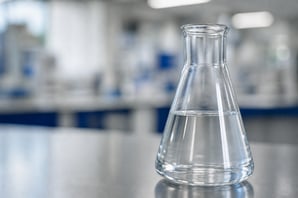
Water that performs adequately in one application may be unsuitable for another. For example, molecular biology workflows can be sensitive to nuclease contamination, while analytical chemistry applications may require strict control of ionic and organic impurities.
When water quality does not align with application requirements, laboratories may encounter:
- Inconsistent experimental results
- Reduced assay sensitivity
- Interference with analytical measurements
- Increased troubleshooting and investigation time
- Greater risk of contamination in sensitive workflows
These issues can be difficult to diagnose because water is used throughout many laboratory processes. When results change unexpectedly, researchers may investigate reagents, instruments, protocols, or operator technique without initially considering water quality.
Treating water as a defined process input rather than a generic consumable can help laboratories identify and control this overlooked variable.
How Water Quality Requirements Differ by Application
The appropriate water specification depends on the intended use. Laboratories should evaluate the contaminants most likely to affect their workflows rather than assuming that a single water grade is suitable for every task.
1. Molecular Biology and Molecular Diagnostics
Molecular biology workflows can be particularly sensitive to enzymatic contaminants.
DNases and RNases can degrade nucleic acids, potentially compromising sample integrity and interfering with downstream applications. The presence of these enzymes can contribute to inconsistent results in workflows involving DNA or RNA.
For these applications, laboratories should evaluate water specifically intended for molecular biology use, including products designated DNase- and RNase-free.
Lifecycle Biotechnologies offers DNase/RNase-free sterile water through its Simple Lifecycle product portfolio.
Explore the Simple Lifecycle reagent portfolio to learn more about available laboratory solutions.
2. Analytical Chemistry and Instrumentation
Analytical workflows may be sensitive to trace ionic and organic impurities.
Depending on the analytical method, these impurities can contribute to background interference, affect detection limits, or complicate instrument calibration and measurement reproducibility.
ASTM water classifications help laboratories identify water specifications appropriate for different analytical requirements. ASTM Type I water is commonly selected for highly sensitive analytical applications where stringent control of ionic and organic contaminants is necessary.
However, laboratories should select a water specification based on the requirements of the analytical method, the instrument manufacturer’s recommendations, and applicable procedures.
The key consideration is not simply whether water is purified, but whether its specified quality is appropriate for the intended analysis.
3. Pharmaceutical and Microbiological Applications
Pharmaceutical and microbiological workflows may require water that meets defined compendial specifications and appropriate microbiological quality requirements.
USP Purified Water is used in a range of pharmaceutical and laboratory applications. The applicable requirements depend on the intended use and the relevant process or regulatory framework.
Microbial contamination and endotoxins are important considerations in workflows where they can affect product quality, test results, or process requirements.
Lifecycle Biotechnologies provides water and reagent solutions intended for pharmaceutical, microbiological, and other life science applications.
Explore Lifecycle’s reagent and manufacturing solutions to learn more about its product portfolio.
Important: ASTM water classifications and USP water specifications serve different purposes. They should not be treated as interchangeable designations. Always verify that the selected product meets the specifications required by the intended application.
What Causes Water Quality to Vary?
Selecting an appropriate water specification is an important first step. However, water quality can also be affected by how water is produced, stored, transferred, and handled.
Several factors deserve consideration.
Differences in Purification Systems
Water purification systems can differ in their design, performance, maintenance requirements, and ability to control specific contaminants.
If multiple facilities or laboratories rely on different systems, their water inputs may not have equivalent characteristics. This can complicate efforts to reproduce a method across locations.
Maintenance and Validation
Purification equipment requires appropriate maintenance and performance monitoring.
Changes in system condition, maintenance practices, or validation status can affect confidence in water quality. Laboratories should establish controls appropriate to their equipment, intended applications, and quality requirements.
Storage and Environmental Exposure
Water quality at the point of production does not necessarily guarantee equivalent quality at the point of use.
Storage conditions, container suitability, environmental exposure, and transfer practices can introduce additional variables. The potential risks depend on the water specification, packaging, storage duration, and handling process.
Operator-Dependent Handling
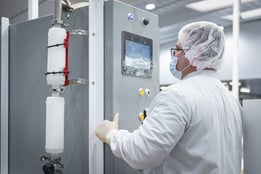 Manual transfer and repeated handling introduce additional opportunities for contamination.
Standardized procedures, appropriate packaging, and controlled dispensing practices can help reduce unnecessary exposure and improve consistency between operators.
For laboratories that require ready-to-use water and reagents, sourcing products manufactured to defined specifications can reduce dependence on local preparation processes. The suitability of this approach depends on the application’s requirements and the controls needed throughout the workflow.
How Water-Related Variability Can Affect Results
Water-related variability can have consequences across several stages of laboratory work.
Molecular Workflows: Nucleic Acid Integrity
Enzymatic contaminants such as DNases and RNases can degrade nucleic acids, potentially affecting amplification, sample integrity, and downstream analysis.
When unexpected results occur, laboratories may need to investigate multiple potential causes. Evaluating the water specification and handling process can help determine whether water quality is a contributing factor.
Analytical Testing: Signal Interference
Trace impurities can affect sensitive analytical measurements.
Depending on the method, unwanted ionic or organic components may contribute to background signals or reduce confidence in measurement reproducibility. Selecting water appropriate for the analytical technique helps establish a more controlled starting point.
Pharmaceutical and Microbiological Processes: Quality Risks
Microbial contamination and endotoxins can be important considerations in pharmaceutical and microbiological applications.
Inadequate control can lead to additional testing, investigations, or process disruptions. The relevant risks and acceptance criteria depend on the application and applicable requirements.
In each case, water quality should be evaluated alongside other potential sources of variability. It is not necessarily the cause of every unexpected result, but it should not be overlooked during root-cause analysis.
How to Improve Laboratory Water Quality Control
A systematic approach can help laboratories better align water specifications with application requirements and reduce unnecessary variability.
1. Define Water Requirements for Each Application
Start by identifying the requirements of the intended workflow.
Consider:
- Which contaminants could affect the application?
- Does the process require water that is DNase- and RNase-free?
- Are ionic or organic impurities a concern?
- Are specific microbiological or compendial requirements applicable?
- What water quality does the instrument manufacturer or validated procedure require?
Documenting these requirements helps prevent the assumption that a single general-purpose water source is suitable for every laboratory activity.
2. Standardize Water Inputs
Where appropriate, standardizing the water used in a workflow can reduce differences associated with local preparation or inconsistent sourcing.
Products manufactured to defined specifications can provide a consistent starting point. Depending on the application, relevant specifications may include conductivity, total organic carbon (TOC), microbial limits, or the absence of specified enzymatic contaminants.
The applicable criteria should be established according to the intended use rather than applied universally across all water types.
3. Control Storage, Handling, and Delivery
Maintaining water quality requires attention beyond the initial purification or manufacturing step.
Review how water is packaged, stored, transferred, and dispensed. Evaluate whether current practices introduce avoidable handling steps or opportunities for environmental exposure.
Appropriate packaging and controlled delivery systems can help support product integrity throughout use. For example, Lifecycle Biotechnologies offers the CHEM+NECT™ closed-delivery system for introducing reagents into clean and microbiologically controlled processes.
Learn more about CHEM+NECT™ and its available packaging configurations.
4. Establish Appropriate Verification Procedures
Water quality requirements should be supported by appropriate verification and documentation.
Depending on the application, this may include reviewing product specifications, applicable test results, certificates of analysis, supplier documentation, and relevant quality records.
For laboratories using in-house purification systems, monitoring and maintenance should align with the system’s intended purpose and the laboratory’s quality procedures.
The objective is to maintain confidence that water meets the requirements of the process in which it is used.
5. Review Water Quality During Root-Cause Investigations
When results become inconsistent, evaluate water alongside other potential contributors.
Review the water specification, source, storage conditions, handling procedures, and any relevant changes to the process. Compare these factors with the requirements of the affected application.
This approach can help laboratories investigate hidden sources of variability more systematically rather than focusing exclusively on the most obvious reagents or equipment.
How Ready-to-Use Water and Reagents Can Support Consistency
Ready-to-use products can help laboratories reduce variability associated with on-site preparation.
By receiving water or reagents manufactured to defined specifications, laboratories may be able to eliminate selected preparation steps and reduce dependence on local formulation practices.
Potential operational benefits include:
- More consistent inputs: Defined product specifications support standardization across repeated workflows.
- Fewer preparation steps: Ready-to-use products eliminate the need for certain on-site preparation activities.
- Reduced handling: Appropriate packaging and dispensing systems can reduce unnecessary transfer steps.
- Simplified workflows: Standardized inputs can make routine laboratory activities easier to manage.
- Improved process control: Documented specifications help laboratories evaluate whether inputs meet application requirements.
These benefits do not eliminate the need for appropriate storage, handling, or verification. Instead, ready-to-use products can form part of a broader strategy for controlling laboratory inputs.
Water and Reagent Solutions from Lifecycle Biotechnologies
Lifecycle Biotechnologies supplies water and reagent solutions for life science applications, with products designed for different workflow requirements.
Depending on the application, relevant offerings include:
- Simple Lifecycle: A portfolio of laboratory reagents that includes DNase/RNase-free sterile water and other commonly used solutions.
- DIFFUMAX®: A product line that includes water and ready-to-use reagents for tissue processing and related applications.
- CHEM+NECT™: A closed-delivery packaging option designed for introducing reagents into clean and microbiologically controlled processes.
- CHEM+POUR™: A packaging system designed to support controlled pouring and aseptic handling.
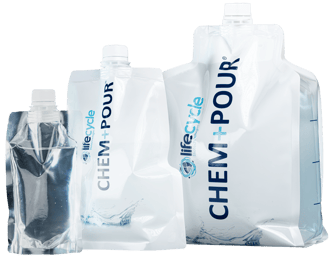 Each product has specific intended uses, specifications, and packaging characteristics. Laboratories should evaluate these details against their process requirements before selecting a solution.
Explore Simple Lifecycle, DIFFUMAX®, CHEM+NECT™, and CHEM+POUR™ to learn more.
Frequently Asked Questions About Laboratory Water Quality
Why is water quality important in laboratory experiments?
Water can affect laboratory results because it is used in sample preparation, reagent formulation, buffers, and many other workflow steps. Contaminants such as nucleases, ionic impurities, organic compounds, microorganisms, or endotoxins may interfere with specific applications. Selecting water that meets the requirements of the intended use helps reduce avoidable variability.
What type of water should be used for molecular biology?
Molecular biology workflows involving DNA or RNA commonly require water specifically designated as DNase- and RNase-free. The exact requirements depend on the procedure and downstream application. Laboratories should verify product specifications rather than relying on a general purified-water designation alone.
What is the difference between ASTM Type I water and USP Purified Water?
ASTM water classifications describe water quality characteristics for laboratory use, while USP Purified Water is a compendial water designation used in applicable pharmaceutical and related settings. They address different requirements and are not interchangeable labels. The appropriate specification depends on the intended application and applicable standards.
Can water contamination cause inconsistent laboratory results?
Yes. Depending on the contaminant and application, water quality issues can contribute to nucleic acid degradation, analytical interference, or microbiological concerns. However, inconsistent results can have multiple causes. Water quality should be considered as part of a broader investigation.
Does purified water remain suitable indefinitely after production?
Not necessarily. Water quality can be affected by storage conditions, packaging, environmental exposure, and handling. Laboratories should follow applicable product instructions and established procedures to maintain the required quality through use.
How can laboratories reduce variability in water quality?
Laboratories can reduce variability by defining application-specific requirements, standardizing water inputs, controlling storage and handling, and implementing appropriate verification procedures. Ready-to-use water and reagents manufactured to defined specifications may also help reduce variability associated with local preparation.
What should laboratories evaluate when selecting a water supplier?
Consider the intended application, product specifications, applicable quality standards, manufacturing controls, available documentation, packaging, and handling requirements. The supplier’s ability to support the laboratory’s specific needs should be evaluated alongside the product itself.
Make Water Quality an Intentional Part of Your Process
Water is fundamental to life science workflows, but its importance can make it easy to overlook as a potential source of variability.
The most effective approach is to define water requirements according to the application, standardize inputs where appropriate, and maintain suitable controls over storage, handling, and verification.
By treating water as a critical process input rather than a generic laboratory utility, organizations can make more informed decisions about reagent selection, improve consistency, and strengthen confidence in their workflows.
Lifecycle Biotechnologies provides water and reagent solutions designed for a range of life science applications.
Have questions about selecting water or reagents for your application? Contact Lifecycle Biotechnologies to discuss your requirements.