

Pharmaceutical Water Types Explained: USP Categories, Uses, and Quality Considerations
Pharmaceutical water is selected according to its intended use and the applicable compendial, product, and regulatory requirements. The nine categories discussed here are Purified Water, Water for Injection (WFI), Pure Steam, Water for Hemodialysis, Sterile Purified Water, Sterile Water for Injection, Sterile Water for Irrigation, Sterile Water for Inhalation, and Bacteriostatic Water for Injection. USP General Chapter <1231>, Water for Pharmaceutical Purposes, is an informational chapter that explains water-system science and practice; applicable USP–NF monographs and other binding requirements establish the official quality standards [1]. Bulk water-system quality depends on validated production, storage, distribution, monitoring, and point-of-use controls. Packaged sterile waters are distinct finished articles with specific uses and limitations.
Water is one of the most widely used materials in pharmaceutical and biopharmaceutical manufacturing. It can serve as an ingredient, solvent, processing aid, cleaning medium, or utility. Yet “pharmaceutical water” is not one universal grade. The appropriate type depends on what the water will contact, the process stage, the product’s route of administration, and the governing requirements.
A useful starting distinction is bulk water versus packaged water. Bulk pharmaceutical water is produced and distributed through a qualified facility water system for use at defined points. Packaged water is manufactured, filled, and treated or sterilized as a finished article, then supplied in a container. Packaging can be useful when a validated bulk system is unavailable or a small, controlled quantity is needed, but it does not make every packaged water interchangeable with every other type.
The terms below describe nine categories in the source article. Some are compendial waters; Pure Steam is a steam utility with a USP monograph. Drinking water and non-potable water are also important in pharmaceutical operations, but are outside this nine-category list.
First, What Does USP <1231> Require?
USP <1231> is titled Water for Pharmaceutical Purposes. Its chapter number matters: USP General Notices classify chapters numbered 1000–1999 as informational [2]. FDA explains that these chapters generally do not contain mandatory requirements, although they may offer recommendations useful for meeting current good manufacturing practice (CGMP) obligations. Accordingly, <1231> is valuable technical guidance, but it should not be described as a standalone enforceable water specification.
 The applicable USP–NF monograph for an official water article sets its compendial identity and quality requirements. Applicable General Notices, referenced test chapters, product-specific requirements, CGMP regulations, and other jurisdictional rules may also apply. A company must determine what applies to its material and use, consult the current official USP–NF text, and maintain a water system suitable for its intended use. FDA’s CGMP framework addresses water supply and plumbing as well as controlled manufacturing procedures; firms must determine and document the controls needed for their processes [3, 4].
This distinction also helps resolve a common confusion: a recommendation or example in <1231>—including discussion of system design, microbial monitoring, or alert/action levels—should not automatically be presented as a universal monograph limit. The applicable monograph and the firm’s scientifically justified, validated control strategy determine the requirements for a particular use. USP itself cautions that its water FAQs are informational and are not official interpretations or proof of compliance (USP water FAQs).
The Nine Pharmaceutical Water Categories
1. Purified Water
Purified Water is produced from water meeting applicable drinking-water requirements through a suitable purification process [5]. Its monograph states that it contains no added substance. It is commonly used in nonparenteral manufacturing and in cleaning applications where its quality is appropriate. It may also be used as a starting water for further processing or in other steps when justified by the product and process requirements.
Purified Water is not sterile by definition. Because water systems can support microbial growth, water quality is not established solely by the treatment technology or a sample from the generation equipment. The storage and distribution loop, sanitization program, operating conditions, sampling locations, and points of use all matter. Peer-reviewed pharmaceutical-water literature describes routine monitoring and validation as central components of control.
2. Water for Injection (WFI)
WFI is a high-purity bulk pharmaceutical water used where WFI quality is required by a monograph, product/process specification, or risk-based manufacturing decision. It is particularly associated with parenteral products and processes where bacterial endotoxins must be controlled. WFI and Purified Water have overlapping chemical quality concepts, but WFI has an endotoxin requirement in its monograph; the two are not interchangeable labels.
Bulk WFI is not sterile WFI. A bulk water system is controlled to supply water of the applicable compendial quality; it does not, simply by that designation, mean the water is sterile or suitable for direct administration. Sterile Water for Injection is a separately defined packaged article. Production methods and required controls must be checked against the currently official USP–NF WFI monograph and applicable regulations. Because pharmacopoeial requirements can change, avoid relying on dated inspection summaries or assuming that methods accepted in one jurisdiction are accepted in another.
3. Pure Steam
Pure Steam is produced by vaporizing suitable feed water while preventing entrainment of source-water droplets. USP recognizes it as a monographed article. It is used in sterilization and other processes where steam condensate contacts product-contact surfaces, containers, materials, or analytical equipment. Its quality should be considered in relation to intended application: dryness, saturation, and noncondensable gases may matter for the process, in addition to condensate quality. Pure Steam is not simply “sterile water in vapor form,” and steam quality requirements should be defined for the use case.
4. Water for Hemodialysis
Water for Hemodialysis is intended for hemodialysis applications, including preparation or dilution of hemodialysis concentrates. It is a specialized water category whose quality requirements are tied to dialysis use and the relevant monograph and healthcare standards. It is not an alternative name for WFI and is not intended for injection. Facilities should follow applicable dialysis-specific requirements and local regulation, rather than infer suitability from pharmaceutical-water classifications alone.
5. Sterile Purified Water
Sterile Purified Water is Purified Water that has been sterilized and suitably packaged; it contains no antimicrobial agents. It can be appropriate for nonparenteral compendial preparations or analytical applications requiring Purified Water when a qualified bulk system is impractical or a relatively small quantity is needed. Its sterility does not convert it into WFI, nor does it make it suitable for parenteral applications.
6. Sterile Water for Injection
Sterile Water for Injection is WFI packaged and rendered sterile. It is commonly used as a sterile diluent or solvent in accordance with the labeling and instructions for the drug being prepared. Because it contains no added solute to make it isotonic, it is not appropriate for direct intravenous administration by itself; the product labeling directs that it be made approximately isotonic before intravenous injection [10]. It is usually supplied in single-dose containers, with official limits and labeling governed by its current monograph and applicable product regulations.
7. Sterile Water for Irrigation
Sterile Water for Irrigation is packaged sterile water intended for irrigation and uses where the relevant particulate-matter requirements for injectable products do not apply. It is not labeled for injection. Larger containers are common because irrigation may require larger volumes, but users should rely on the particular product labeling and monograph rather than container size alone to determine suitability. USP describes this category as distinct from Sterile Water for Injection, including its particulate-matter treatment.
8. Sterile Water for Inhalation
Sterile Water for Inhalation is sterile packaged WFI intended for inhalators and preparation of inhalation solutions as described in its labeling. It has a less stringent bacterial endotoxin specification than Sterile Water for Injection and is therefore not suitable for parenteral applications. The route and intended use are essential distinctions: “sterile” does not mean universally interchangeable among inhalation, irrigation, and injection waters.
9. Bacteriostatic Water for Injection
Bacteriostatic Water for Injection is sterile WFI containing one or more suitable antimicrobial preservatives. It is used as a diluent in appropriate products, often where repeated withdrawals are required, subject to product labeling and preservative compatibility. It is not interchangeable with preservative-free Sterile Water for Injection, and the preservative may make it unsuitable for some patients, drugs, or routes. Follow the specific drug’s reconstitution instructions and the water product label (peer-reviewed discussion of bacteriostatic WFI) [9].
Choosing Water: Intended Use Drives the Decision
A practical selection process begins with the water’s point of use, not simply the process name or the desired “highest” grade. Ask:
What will the water contact? Product ingredients, product-contact surfaces, equipment, or a non-product utility may call for different quality attributes.
What is the route and dosage form? Injectable, inhaled, irrigated, oral, topical, and analytical applications are not interchangeable categories.
What does the current monograph, product label, and applicable regulation require? Identify the controlling requirements before setting a specification.
Is the water bulk or packaged? A validated bulk loop and a sealed sterile container bring different controls, risks, and operational considerations.
Can the system consistently deliver the required quality at the point of use? Generation, storage, distribution, sampling, sanitization, and user practices are part of the control strategy.
Selecting water with insufficient quality can put product quality and patient safety at risk. Specifying a higher grade without a technical or regulatory reason can add cost and operational burden without improving the intended outcome. The right choice is the lowest quality category that fully satisfies the applicable requirements and is shown suitable for the process, with quality managed across its full lifecycle.
Bulk Systems and Packaged Water: Different Control Questions
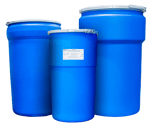 Bulk systems call for lifecycle control: appropriate design, qualification/validation, routine monitoring, sanitization, maintenance, and review of trends. Biofilm control is a recurring engineering and microbiological concern in water systems; it is one reason periodic testing alone cannot replace a robust system-control program. A recent industry engineering review discusses design and microbiological-control considerations for pharmaceutical water systems [7, 8].
Packaged waters shift attention to the specific article, container, closure, sterilization or preservative status, label, storage conditions, and intended use. Their convenience does not erase distinctions among grades. For example, sterile purified water is not sterile WFI; sterile water for inhalation is not an injectable diluent; and irrigation water is not labeled for injection.
Selecting the Right Water for Your Application
Pharmaceutical water selection is a quality and process decision grounded in intended use. Knowing the distinctions among the nine categories helps teams avoid costly misclassification—especially confusing bulk WFI with sterile WFI, assuming all sterile waters are interchangeable, or treating informational USP <1231> guidance as though it were itself a monograph. Start with the current official standards and product requirements, then design and maintain controls that deliver the required quality where the water is actually used.
For manufacturers evaluating packaged pharmaceutical water or supply needs, Lifecycle Biotechnologies can help discuss product options and sourcing considerations in the context of the intended application. Final water selection and qualification should remain aligned with the customer’s quality system, current compendial text, and applicable regulatory requirements.
Frequently Asked Questions
What are the nine types of pharmaceutical water?
The nine categories covered here are Purified Water, Water for Injection (WFI), Pure Steam, Water for Hemodialysis, Sterile Purified Water, Sterile Water for Injection, Sterile Water for Irrigation, Sterile Water for Inhalation, and Bacteriostatic Water for Injection. Pure Steam is a monographed steam utility rather than a liquid water grade.
Is USP <1231> mandatory?
USP <1231> is an informational General Chapter, not a standalone mandatory specification. Applicable water monographs, General Notices, referenced standards, CGMP regulations, product requirements, and other laws may impose binding requirements. FDA explains the general status of USP chapters numbered above <999> in its CGMP Q&A.
What is the difference between Purified Water and WFI?
Both are pharmaceutical waters with official monographs, but WFI includes a bacterial endotoxin requirement and is selected for uses demanding that quality. The applicable monographs and process requirements—not a generic assumption that “more pure is always better”—should guide selection.
Is bulk WFI sterile?
No. Bulk WFI is not sterile merely because it meets WFI quality requirements. Sterile Water for Injection is a separate packaged article that has been rendered sterile.
Can Sterile Water for Inhalation be used for injection?
No. Its bacterial endotoxin specification is less stringent than that for Sterile Water for Injection, and it is not suitable for parenteral applications.
Is Sterile Water for Irrigation interchangeable with Sterile Water for Injection?
No. Sterile Water for Irrigation is not intended for injection and has distinct compendial requirements and labeling. Use only for the labeled purpose.
Does sterile water always mean injectable water?
No. Sterility describes one attribute. The source water grade, endotoxin quality, particulate requirements, added preservatives, packaging, and labeled route also determine suitability.
Why do pharmaceutical water systems need ongoing monitoring?
A system’s water quality can be affected by generation, storage, distribution, microbial control, maintenance, and point-of-use conditions. Routine monitoring and trend review help demonstrate ongoing control and detect adverse changes; a single test result does not validate the entire system.
References
1. United States Pharmacopeia. General Chapter <1231>, *Water for Pharmaceutical Purposes*. USP–NF.
2. United States Pharmacopeia. General Notices and Requirements. USP–NF.
3. U.S. Food and Drug Administration. Questions and Answers on Current Good Manufacturing Practice Requirements: General Provisions.
4. U.S. Food and Drug Administration. 21 CFR § 211.48, Water supply.
5. United States Pharmacopeia. Purified Water monograph; Sterile Purified Water monograph; Pure Steam monograph. Consult the current official USP–NF for the applicable monographs and revisions.
6. United States Pharmacopeia. FAQs: Water for Pharmaceutical and Analytical Purposes. Informational resource; not an official interpretation.
7. Shintani H. Validation Study and Quality Assurance of Pharmaceutical Water, Waterborne Microorganisms and Endotoxins. Biocontrol Science. 2016;21(4):203–214. doi:10.4265/bio.21.203.
8. International Society for Pharmaceutical Engineering. Design and Control of Pharmaceutical Water Systems to Minimize Microbiological Contamination. Pharmaceutical Engineering. 2017. ISPE article.
9. Hu J, et al. Critical Aspects of pH Measurement for Bacteriostatic Water for Injection. Journal of Pharmaceutical Sciences. 2023;112(8):2307–2310. PubMed.
10. U.S. National Library of Medicine. FDA-approved labeling example: Sterile Water for Injection.